Cold-Climate Air Source Heat Pumps: Improving Installations by Weatherizing First
Reducing Loads Leads to Improved Heat Pump Installations
Nine out of 10 homes in the U.S. are under-insulated. Air leakage can account for 25–40% of the energy used for heating and cooling in a typical home. Basic weatherization improvements can significantly reduce the design loads of New York State homes.
HVAC Contractor Benefits

Reduced design loads allow for a more compact system design. This saves installation time and first-cost, resulting in a more competitive bid and long-term bill savings.

Upgrading the building envelope before the heat pump installation prevents an oversized, inefficient heat pump and ensures customer comfort while preventing callbacks.

Offering weatherization services and providing the best possible solution builds customer trust, improves your reputation, increases revenue, and diversifies your business.

Reducing the heating load creates a more balanced approach for homes in cold climate regions and prevents ineffective humidity control and short cycling.
Prioritizing Weatherization Measures
Weatherization measures vary in impact and complexity. The table below ranks common measures by priority to the building. Measures with a (✓) are easily done without much additional training. HVAC contractors can often offer measures with a (+) after some extra effort. Other measures are best done in collaboration with a home performance contracting partner.
| Priority | Weatherization Measures | Homeowner DIY | HVAC Contractor | Home Performance Partner |
|---|---|---|---|---|
| ★★★★ | Air-seal attic and below-grade spaces | ✓ | ✓ | |
| ★★★★ | Duct clean, seal, and insulate | ✓ | ✓ | |
| ★★★★ | Attic insulation and radiant barrier to Energy Code | + | ✓ | |
| ★★★★ | Rim joist / below-grade insulation | + | ✓ | |
| ★★★ | Continuous exterior insulation and windows upgrade | ✓ | ||
| ★★ | Air-seal any wall penetration | ✓ | ✓ | ✓ |
| ★★ | Weatherstrip windows & doors | ✓ | + | ✓ |
| ★ | Solar control window film | ✓ | + | ✓ |
| ★ | Electrical outlet gaskets | ✓ | + | ✓ |
| ★ | Exterior shading on exposed walls | ✓ | ✓ |
Tightly air-sealing a home requires addressing ventilation and indoor air quality. The HVAC contractor or home performance partner should also install kitchen and bathroom exhaust fans which vent to the exterior, and/or an Energy-Recovery Ventilation (ERV) or HeatRecovery Ventilation (HRV) mechanical ventilation system.
How to Add Weatherization to Your Business

Join or use resources from trade associations, such as the Building Performance Contractors Association (BPCA) of New York State, to learn more about the industry. You’ll also expand your network to grow your business and workforce.

Partner with an established home performance contractor and work together to decarbonize more homes by weatherizing and electrifying heating and cooling.

Hire an experienced professional in the home performance market to help kick start your weatherization services. NYSERDA workforce development programs offer wage reimbursement that can support you financially.

Seek training support from a trade association, insulation and air sealing product manufacturer, or a distributor. You can also attend a sponsored conference or workshop and take advantage of free training from the Department of Energy, WxTV, the Building Performance Association, or National Grid’s Project C.

Obtain certifications and credentials, like Building Performance Institute (BPI) certification, to become an installer in existing weatherization programs such as NYSERDA EmPower+, NYSERDA Comfort Home, PSEG Home Comfort, and more.
How to Sell Weatherization to the Customer
Help your customers understand the value of adding weatherization to your scope of work by making your services more relatable. Provide them with a clear comparison: just as a coat only works in winter if it is zipped up and thick enough to keep the heat in, a home’s HVAC system and building envelope require proper sealing and insulation to ensure reliability, performance, comfort, and safety.
Additional Benefits to the Customer

Temperatures and humidity stay more consistent throughout the home. This leads to better year-round comfort.

Homeowners can purchase a smaller and higher quality HVAC system that uses less energy and may potentially lower monthly bills.

Less pollen, dust, and pests enter the home, improving the quality of living for those with allergies, asthma, and with other respiratory concerns.

Roof snow melts more evenly, reducing the chance of ice dams. The attic will stay drier, reducing the risk of building damage from moisture.
Case Study: Incorporating Weatherization
Scenario
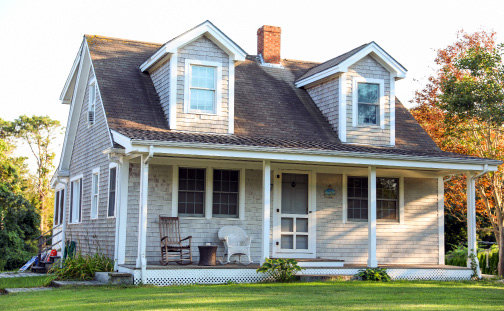
Homeowners of a 1950’s single-family, two-story 1700 square foot Cape Cod style house in Saratoga County, NY are looking to get a full load cold-climate air source heat pump (ccASHP) system installed. The building envelope is poorly insulated and leaky (67,000 Btu/hr heating load and 25,000 Btu/hr cooling load).
Infiltration: 20,413 Btu/hour (30%)
Semi-loose
Ceiling: 9,632 Btu/hour (14%)
- Vented attic
- R-7 cavity insulation
- Asphalt shingles
- No roof deck insulation
Ducts: 15,514 Btu/hour (33%)
- Unsealed and uninsulated
- Located in an enclosed crawlspace
Walls: 9,835 Btu/hour (15%)
Above grade
- Vented attic
- 2' x 4' wood stud framing
- R-13 cavity insulation
- No exterior board insulation
- Vinyl siding
Below grade
- Concrete masonry
- No insulation
Doors: 565 Btu/hour (1%)
Metal with fiberglass core
Floors: 6,302 Btu/hour (9%)
Above grade
- Wood frame
- R-19 cavity insulation
- Vented/leaky crawlspace
Below grade
- Concrete slab floor
- No insulation
Windows: 5,203 Btu/hour (8%)
Clear low-e double pane operable windows with clad wood framing
With the existing 77,000 Btu/hr natural gas, direct vent furnace with integrated 36,000 Btu/hr split system, annual energy costs* are around $3,414, or more than $51,000 over 15 years.
Initial Bid
Four Multi-Zone Ductless Split Systems
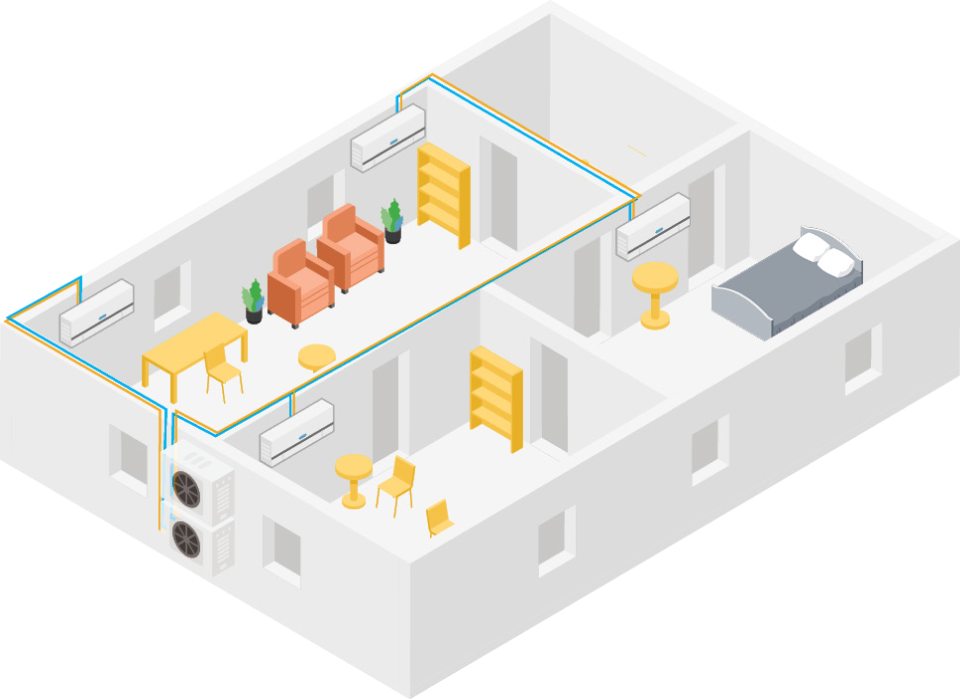
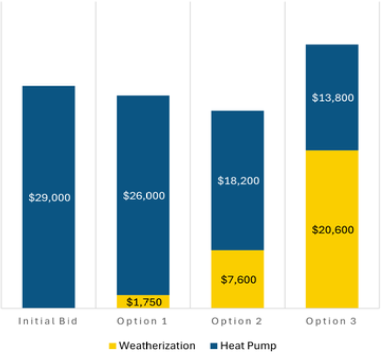
The HVAC contractor’s initial bid is to install four multi-zone ductless split heat pump systems due to concerns that reusing the existing leaky ductwork will not meet the home’s heating load. This initial bid will require an estimated upfront cost of $29,000 and annual energy cost of $4,102, or more than $61,000 over 15 years. To reduce the load and needed system capacity, the HVAC contractor proposes three weatherization packages to upgrade the ducts and envelope. Potential weatherization and heat pump packages with estimated costs and savings are detailed below.
*Estimated and average costs are based on energy pricing as of November 2024, per the Energy Information Administration, and are specific to the unique home outlined above.
Four Package Options for Case Study Home:
The following shows various scenarios for how conducting envelope improvements to this example home leads to HVAC performance benefits, reduced heating and cooling loads, and reduced lifetime energy costs. Even simple upgrades, such as air sealing and installing attic insulation, will reduce the heating load enough to install a smaller heat pump, improve the homeowner’s comfort, and lead to a higher satisfaction with their heat pump system. Although one of these scenarios increases upfront costs, it has the lowest annual and lifetime energy costs.
| Upgrade Packages & Heat Pump Install | Package Total | Heating Load | Cooling Load | *Estimated Annual Energy Costs | **Lifetime Energy Cost | |
|---|---|---|---|---|---|---|
|
Initial Bid
|
Weatherization Upgrades: None. Heat Pump System: Four multi-zonal ductless split 66 kBtu/hr heat pump systems throughout the home. |
$29,000 | 67 kBtu/hr | 25 kBtu/hr | $4,102 | $61,530 |
|
Option 1
|
Weatherization Upgrades: Sealing all ductwork and insulating exposed ducts in unconditioned spaces to R-8 wrap. Heat Pump System: One 42 kBtu/hr central packaged heat pump for the main floor of the home & two 6 kBtu/hr mini-splits for the upstairs. |
$27,750 | 55 kBtu/hr | 21 kBtu/hr | $3,371 | $50,565 |
|
Percent or amount change compared to initial bid. |
↓ $1,250 | ↓ 19% | ↓ 17% | ↓ $731/yr | ↓ $10,965 | |
|
Option 2
|
Weatherization Upgrades: Includes Option 1 Package, plus air sealing and insulating the small attic spaces and knee walls with foam board and cellulose insulation. Heat Pump System: One 42 kBtu/hr central packaged heat pump for the entire home. |
$25,800 | 42 kBtu/hr | 17 kBtu/hr | $2,591 | $38,865 |
|
Percent or amount change compared to initial bid. |
↓ $3,200 | ↓ 38% | ↓ 30% | ↓ $1,511/yr | ↓ $22,665 | |
|
Option 3
|
Weatherization Upgrades: Includes Option 2 Package, plus installing R-19 below-grade interior wall and R-12 above-grade exterior foam board wall insulation and reusing siding. Heat Pump System: One 36 kBtu/hr central packaged heat pump for the entire home. |
$34,400 | 37 kBtu/hr | 15 kBtu/hr | $2,268 | $34,020 |
|
Percent or amount change compared to initial bid. |
↑ $5,400 | ↓ 47% | ↓ 39% | ↓ $1,834/yr | ↓ $27,510 |
*Estimated energy costs are based on energy pricing as of November 2024 per the Energy Information Administration. Heat pump system pricing is based on market prices for R-410A equipment and is specific to the unique home outlined above.
**Lifetime Energy Cost Savings, assuming a minimum 15 year expected useful life, compared to lifetime energy costs of initial bid for four multi-zone ductless mini splits systems for home with no weatherization envelope upgrades.
Weatherization Works
The three weatherization and heat pump packages focus progressively on sealing more of the home’s thermal envelope, starting with the ductwork, and then adding in the attic/roofline spaces, and finally the walls. ACCA Manual J calculations confirm that these envelope improvements allow for smaller capacity heat pump systems and, inherently, reduced energy costs.
For two of the three weatherization packages, the energy cost savings will more than pay for the envelope upgrades over the lifetime of the heat pump.
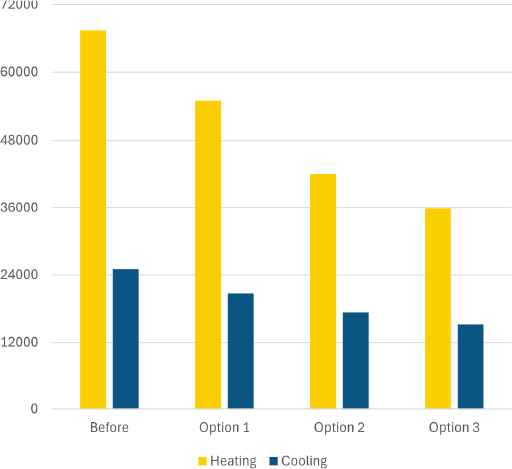
The upgrades will also reduce the cooling load by up to 45%. This shrinks the ratio of heating to cooling, which reduces cooling system oversizing and the incidences of short-cycling. With the Option 3 package described above, the cooling load drops from approximately 25,000 Btu/hr to just over 15,000 Btu/hr.
By reducing the design loads of the home, you will be able to install a higher quality system with a lower overall capacity while reducing installation and energy costs for the homeowner. Most importantly, for a similar installation cost to the customer, you can be confident in the customer’s comfort and satisfaction knowing the new system will run more effectively and efficiently than if the home’s envelope had not been improved.
Heating and Cooling Load Reduction with Weatherization Upgrades
Weatherization and Heat Pump Costs per Option